
home page ← Buzz@Bruss! Edition #8 ← Stick to science
Officials using exaggerated and unsubstantiated claims or rhetoric to push their political views – sound familiar? Unfortunately, that has become all too common in the social media dominated society we live in today. However, when EU commissioners disguise their opinions on nicotine as facts, unproven by science, we feel it is our duty to call it out.
A couple of recent posts caught the eye and we asked Javier Martinez, Science and Health Principal Director from JTI’s Scientific and Regulatory Affairs Department, to respond.
In September this year, when referring to revisions to the Tobacco Products & Tobacco Advertising Directives, Health Commissioner Oliver Varhelyi, wrote on X (formerly Twitter) that “Nicotine is addictive, damages the heart and contributes to cancer development” after previously alleging that “nicotine causes cancer.”
Javier Martinez “When responding to allegations like these it’s very important to decouple nicotine from smoking-related diseases. That’s where potential confusion arises.
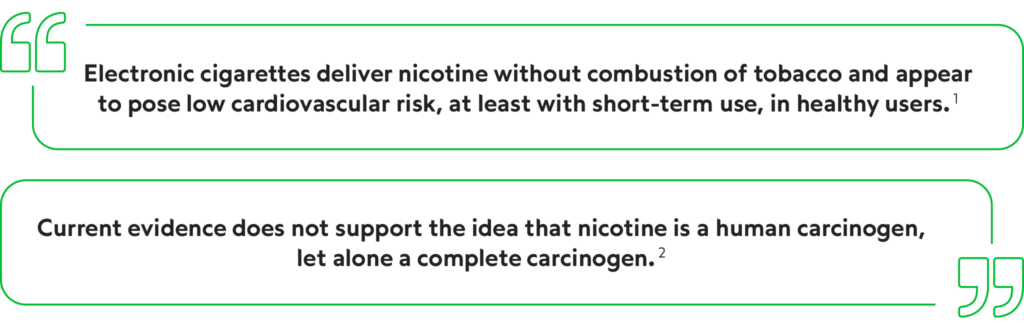
I hear you, nicotine is addictive. Nevertheless, it does not cause cancer… that’s an accurate fact and substantiated by decades of scientific literature. Moreover, studies also indicate that there is no additional cardiovascular risk for already healthy consumers who use nicotine. As for respiratory conditions such as chronic bronchitis or emphysema there’s no data to say that nicotine increases those diseases. This comes from readily available evidence substantiated by public health statements from, for example, both the United States and the UK. So that’s the reality – the science just doesn’t say so.”
Varhelyi further stated that “vaping has created completely new health risks that are comparable or even bigger than smoking itself.” His EU colleague, Commissioner Wopke Hoekstra went on to claim that “vaping kills…. and kills our children in particular.” He was referring to US research on vaping-related pulmonary disease and deaths, and to the so called ‘popcorn lung’ disease.*
JM “I respect that people may have questions when it comes to nicotine. Let me conclude: Aside from the risk of addiction, nicotine presents little risk to healthy adults at levels typically obtained in legally-available tobacco and nicotine-containing products.
If politicians wish to make headline-grabbing statements they should ensure that they are backed by supporting weight of evidence and complete analysis of literature.”
*Ancient cases resolved
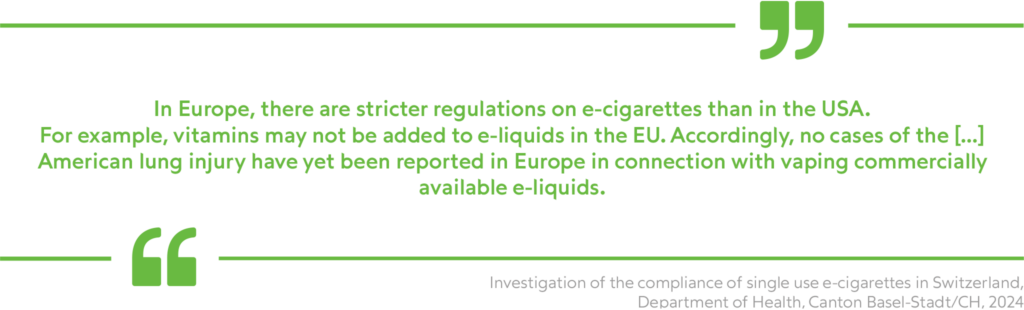
An outbreak of e-cigarette, or vaping, product use-associated lung injury began in 2019 among users of illegal, unregulated cannabis vaping products, almost exclusively in the United States. The first cases were identified in April 2019. As of 18 February 2020, a total of 2,807 hospitalized cases, including 68 deaths, had been confirmed. Later the US Center of Disease Control stated: “No specific e-cigarette device or substance has been linked to all cases, and e-cigarettes include a variety of chemicals and additives.”
Bronchiolitis obliterans (BO), also known as obliterative bronchiolitis, constrictive bronchiolitis and popcorn lung is a disease that results in obstruction of the smallest airways of the lungs due to inflammation.
Public Health England writes that the association has come about as “some flavorings used in e-liquids to provide a buttery flavor contain the chemical diacetyl. However, diacetyl is banned as an ingredient from e-cigarettes and e-liquids in the UK.” The UK National Health Service’s website states that “vaping does not cause ‘popcorn lung’”.
JTI has never used diacetyl in their e-liquid formulations.
For more information on Nicotine explained @ JTI: https://www.jti.com/en/science/nicotine-explained
1. Benowitz NL, Burbank AD, Cardiovascular toxicity of nicotine: Implications for electronic cigarette use, Trends Cardiovasc Me, 2016.
2. Public health consequences of e-cigarettes, National Academies of Sciences, Engineering, and Medicine, 2018.