
Buzz@Bruss!

JTI EU Affairs bulletin 

home page ← Buzz@Bruss! Edition #10 ← TPD Evaluation: Is Brussels putting the cart before the horse?

As the EU prepares the next phase of the Tobacco Products Directive (TPD) revision, a new assessment paper from thinktank EPIC → asks a simple but important question: has the Commission’s Evaluation Report done enough to justify the regulatory direction now being suggested?

Evaluation vs. Impact Assessment

The paper’s core argument rests on a simple distinction in the EU’s Better Regulation process:

An Evaluation looks backwards: Did existing rules work, and what gaps remain?

An Impact Assessment looks forwards: What policy options are available, and which one is most effective and proportionate?

The paper argues that the Commission’s Evaluation sometimes moves beyond diagnosing problems and begins to point towards potential regulatory solutions before those options have been fully tested through the Impact Assessment.

The paper does not challenge the public health objectives of the EU tobacco framework. Nor does it argue against future changes. Instead, it focuses on process.

According to the assessment, the Commission’s evaluation usefully maps how the tobacco and nicotine market has evolved since the current rules were introduced. Novel products, digital marketing, enforcement challenges and growing differences between Member States are all identified as areas deserving further attention.

But the paper also highlights several limitations acknowledged by the Commission itself, including difficulties in attributing outcomes directly to the Tobacco Products Directive, gaps in economic data and uncertainty surrounding the long-term impacts of newer nicotine products.

One element attracting particular attention is that the draft evaluation received a negative opinion from the Regulatory Scrutiny Board (RSB) in December 2025. While the Commission subsequently revised the document, EPIC argues that questions remain around causality, evidence quality and the distinction between identifying regulatory gaps and advocating specific solutions.

The EPIC report’s central message is that an evaluation should diagnose problems, while an Impact Assessment should test policy responses. Blurring the two risks narrowing the range of options before they have been properly assessed.

Whether one agrees with that conclusion or not, the debate points to a broader issue that appears regularly in Brussels: how to ensure major policy revisions are based on evidence rather than assumptions, while still allowing policymakers to pursue ambitious objectives.

For now, the debate is less about the substance of future tobacco regulation than about the process guiding it. With the Impact Assessment now underway, the key question is whether the evidence ultimately supports the policy choices that may emerge from it. The report accompanying any future revision proposal will need to demonstrate not only that challenges exist, but also why the chosen EU-wide regulatory response is justified over the available alternatives.

The paper in a nutshell
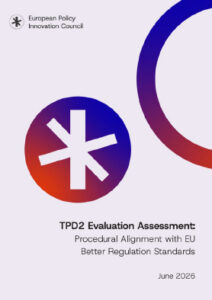

Using the EU’s Better Regulation principles as a benchmark, a new EPIC paper – commissioned by Tobacco Europe – assesses whether the Commission’s evaluation of the Tobacco Products Directive provides a sufficiently robust foundation for the next stage of the revision process.

Its conclusion: the evaluation identifies important issues, but several questions should be tested further during the Impact Assessment.

Download TPD2 Evaluation Assessment paper here (PDF)